

Why the 2027 Chevrolet Bolt Could Be One of Chevy’s Smartest Value Stories Yet
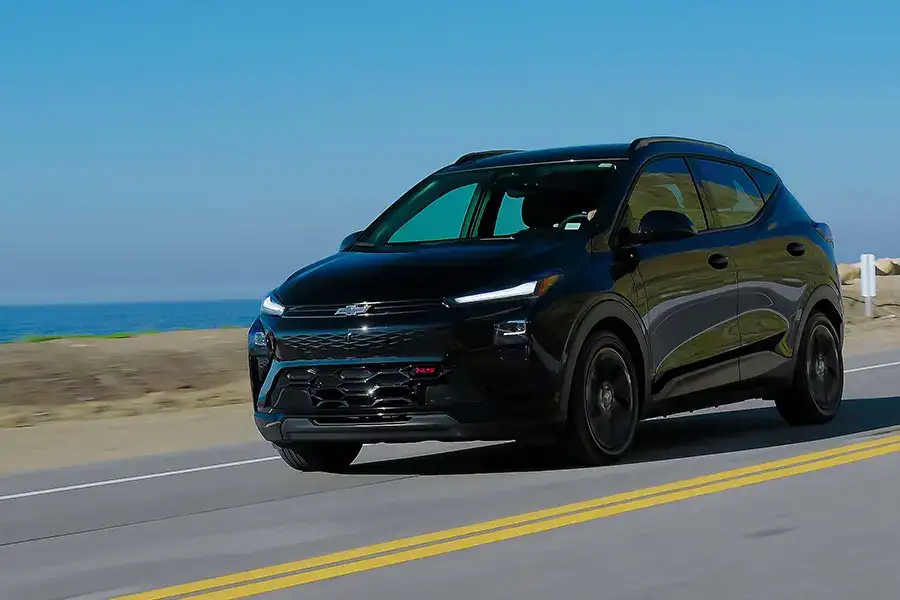
Shoppers waiting for the 2027 Chevrolet Bolt have more to look at than a low starting price. The bigger story is how the Bolt combines a relatively accessible entry point with the kind of day-to-day savings that can keep adding up long after you leave the lot. With a starting MSRP of $27,600, an EPA-estimated 262 miles of range, GM-estimated 10% to 80% DC fast charging in 25 minutes, a standard NACS charge port, and more than 20 standard safety and driver assistance features, the new Bolt has the specs to make that case feel real instead of theoretical.¹
Bolt at a Glance
- Starting MSRP of $27,600 for Bolt LT¹
- Available in LT and RS trims¹
- EPA-estimated 262 miles of electric range¹
- GM-estimated 10% to 80% DC fast charging in 25 minutes¹
- Standard NACS charge port¹
- 210 horsepower¹
- 11.3-inch diagonal touchscreen and 11-inch Driver Information Center¹
- Over 20 standard safety and driver assistance features¹
- Available Super Cruise driver assistance technology¹
- 8-year/100,000-mile battery limited warranty¹
Affordable Up Front Is Only Part of the Story
A lot of EV coverage stops at sticker price. That is only half the picture.
What makes the returning Bolt especially interesting is that it may also help reduce what ownership feels like week after week. Chevrolet says its EVs do not require oil changes, transmission flushes, engine belt replacement, engine air filter replacement, or spark plugs.² That does not mean maintenance disappears, but it does mean the routine ownership conversation changes in ways many gas-vehicle shoppers immediately understand.
For many buyers, that is where the Bolt starts to look more compelling. A lower MSRP helps get the vehicle onto the shopping list. Lower fuel and routine maintenance needs can help keep it there.
Why the Savings Angle Matters
The 2027 Bolt’s official EPA efficiency figures beyond range are not yet fully published on the current Chevrolet model page, so the cleanest way to discuss operating-cost potential is to use the most recent official EPA data available for the earlier Bolt EV as a reference point. The 2022 Chevrolet Bolt EV was rated at 120 combined MPGe and 28 kWh per 100 miles.³
That does not mean the 2027 Bolt will post identical efficiency numbers. It does give shoppers a reasonable benchmark for understanding why the Bolt name keeps coming up in affordability conversations.
A Delaware Cost Example
Using that 28 kWh-per-100-mile figure as a reference:
- Delaware residential electricity averaged 16.51 cents per kWh in January 2026.⁴
- AAA listed Delaware regular gasoline at $3.798 per gallon on March 24, 2026.⁵
- A 30-mpg gas vehicle would use about 3.33 gallons to travel 100 miles.⁵
- A Bolt-like EV using 28 kWh per 100 miles would use about 28 kWh to travel the same distance.³
That works out to roughly:
- About $4.62 per 100 miles in electricity for the EV³ ⁴
- About $12.66 per 100 miles in fuel for the 30-mpg gas vehicle⁵
- About $8.04 saved per 100 miles in energy costs alone³ ⁴ ⁵
At 15,000 miles per year, that difference comes to about $1,206 in annual energy-cost savings, before factoring in skipped oil changes.² ³ ⁴ ⁵
Real-world results will vary with temperature, charging habits, electricity plans, driving style, and what vehicle you are comparing against. Even so, the basic point is hard to miss: when the upfront price is already relatively approachable, lower operating costs can make the overall value story much stronger.
A Better Fit for Everyday Driving Than Some Shoppers Expect
The Bolt’s appeal is not that it tries to be everything. It is that it looks well matched to the way many people actually drive.
For drivers spending the week on Route 273, heading along US 40, or making regular trips around New Castle before jumping onto I-295 toward the Delaware Memorial Bridge, a smaller EV with useful range and faster public charging can make a lot of sense. It also looks like a smart fit for households that want a practical commuter, a lower-cost second vehicle, or an easier first step into EV ownership without moving into a larger and more expensive electric model.
That is what gives the Bolt more substance than a typical return-announcement headline. This is not just a revived nameplate. It is Chevrolet making another serious push at the part of the EV market many shoppers care about most: value.
Charging Convenience Helps the Case
Affordability matters more when the vehicle is easy to live with.
Chevrolet says the 2027 Bolt has a standard NACS charge port and can use public DC fast chargers, including Tesla Superchargers. Chevrolet also says its available public-charging network now includes more than 250,000 chargers across the U.S. and Canada.¹ For buyers who have been interested in EVs but hesitant about charging access, that may be one of the most meaningful improvements in the ownership story.
The Real Opportunity for Shoppers
The strongest case for the new Bolt is not just that it is less expensive than many EVs. It is that the savings story can stack:
- A lower starting price than many EV alternatives¹
- Lower day-to-day energy costs in the right driving routine³ ⁴ ⁵
- Fewer traditional maintenance items than a gas vehicle²
- Modern charging hardware and broad charging access¹
- A practical range figure for commuting, errands, and everyday use¹
For shoppers who have been waiting for an EV that feels more financially grounded, that combination could make the 2027 Chevrolet Bolt one of Chevrolet’s most important models again.
FAQ
How much does the 2027 Chevrolet Bolt cost?
The 2027 Chevrolet Bolt LT starts at $27,600, and Chevrolet lists the RS starting at $31,600.¹
What range does the 2027 Bolt offer?
Chevrolet lists the 2027 Bolt with an EPA-estimated 262 miles of electric range.¹
Does the 2027 Bolt use NACS and Tesla Superchargers?
Yes. Chevrolet says the 2027 Bolt has a standard NACS charge port and can use public chargers including Tesla Superchargers.¹
How fast can the new Bolt charge?
Chevrolet lists a GM-estimated 10% to 80% charging time of 25 minutes with DC public fast charging.¹
Could a Delaware driver actually save money on fuel?
Potentially, yes. Using older official Bolt EV efficiency data as a reference, current Delaware electricity pricing, and current Delaware gas pricing, the difference can add up to roughly $1,206 per year at 15,000 miles of driving compared with a 30-mpg gas vehicle.³ ⁴ ⁵
Drivers who want to take a closer look at the returning Bolt can explore available inventory and connect with Nucar Chevrolet of New Castle to see whether this all-electric hatchback fits their budget, commute, and charging routine.
Footnotes
¹ Chevrolet, official 2027 Bolt model information. (Chevrolet)
² Chevrolet, official EV affordability and EV maintenance information. (Chevrolet)
³ FuelEconomy.gov, official 2022 Chevrolet Bolt EV efficiency data. (Fuel Economy)
⁴ U.S. Energy Information Administration, Delaware residential electricity price, January 2026. (U.S. Energy Information Administration)
⁵ AAA Fuel Prices, Delaware average regular gas price, March 24, 2026. (AAA Fuel Prices)
0 comment(s) so far on Why the 2027 Chevrolet Bolt Could Be One of Chevy’s Smartest Value Stories Yet