

2027 Chevrolet Bolt Wins Car and Driver EV of the Year: What Changed from the Bolt EV and Bolt EUV?
The 2027 Chevrolet Bolt has been named Car and Driver’s 2026 EV of the Year, earning recognition for its accessible price, practical interior, improved charging performance, useful driving range, and easy-to-use controls.¹
The award also confirms that the Bolt’s return is more than a familiar nameplate coming back to market. Chevrolet preserved the roomy, city-friendly proportions of the previous Bolt EUV while substantially updating the battery, charging system, motor, electrical architecture, and cabin technology.
For shoppers comparing the 2027 Chevrolet Bolt with the previous Bolt EV and Bolt EUV, the most important changes are easy to identify: charging is much faster, highway range has improved, the technology is newer, and the spacious Bolt EUV-based shape remains.
View our 2027 Chevrolet Bolt inventory
How Did the 2027 Chevrolet Bolt Earn EV of the Year?
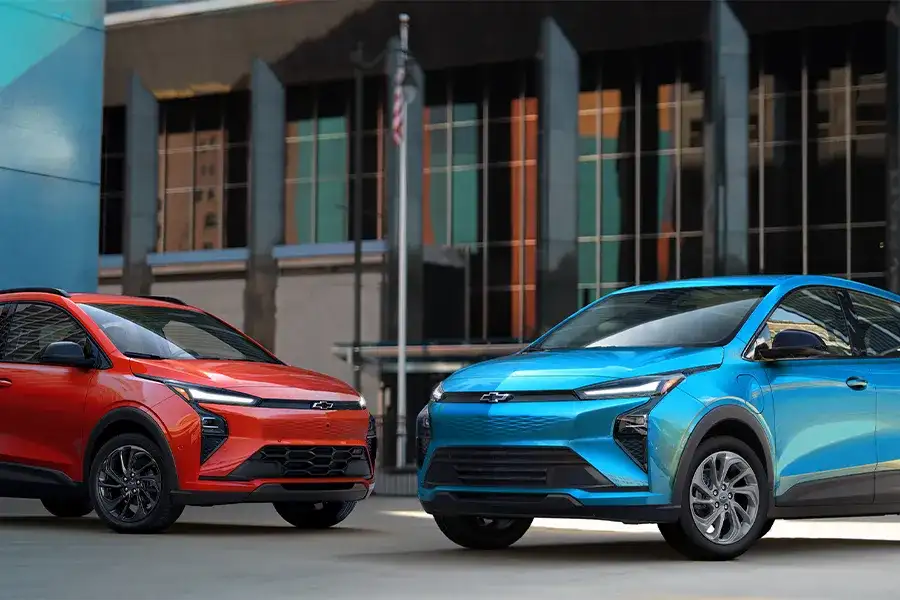
Car and Driver evaluated the latest electric vehicles based on value, driving enjoyment, technology, and how successfully each vehicle fulfilled its intended purpose. The publication selected the Bolt because it delivers the qualities many EV shoppers need without relying on extreme horsepower, an oversized battery, or luxury-level pricing.¹
The Bolt’s mission remains refreshingly direct: make electric driving practical and approachable.
Its compact dimensions suit crowded parking lots and everyday stops around Hares Corner, while its roomy rear seating and flexible cargo area provide space for school schedules, shopping trips, and weekend gear. The new model then adds the faster charging and updated electrical systems that the previous generation lacked.
Is the 2027 Chevrolet Bolt Completely New?
The 2027 Bolt is best understood as a familiar vehicle with substantially new technology underneath.
The original Chevrolet Bolt EV arrived for the 2017 model year and helped introduce long-range electric driving to a broader group of buyers. Chevrolet later added the Bolt EUV, which used a longer wheelbase and a more crossover-like body to provide additional rear-seat space.
Production of the previous Bolt EV and Bolt EUV ended in December 2023. The returning 2027 Bolt drops the EUV name but retains the outgoing Bolt EUV’s basic body structure, exterior proportions, and 105.3-inch wheelbase.¹
That familiar foundation is paired with a different battery chemistry, a faster charging system, a new motor, updated electronic architecture, revised regenerative-braking controls, and newer driver-assistance and energy-management capabilities.
In other words, Chevrolet kept the useful shape and focused many of the largest improvements on the systems EV drivers interact with most.
2027 Chevrolet Bolt vs. the Previous Bolt EV and Bolt EUV
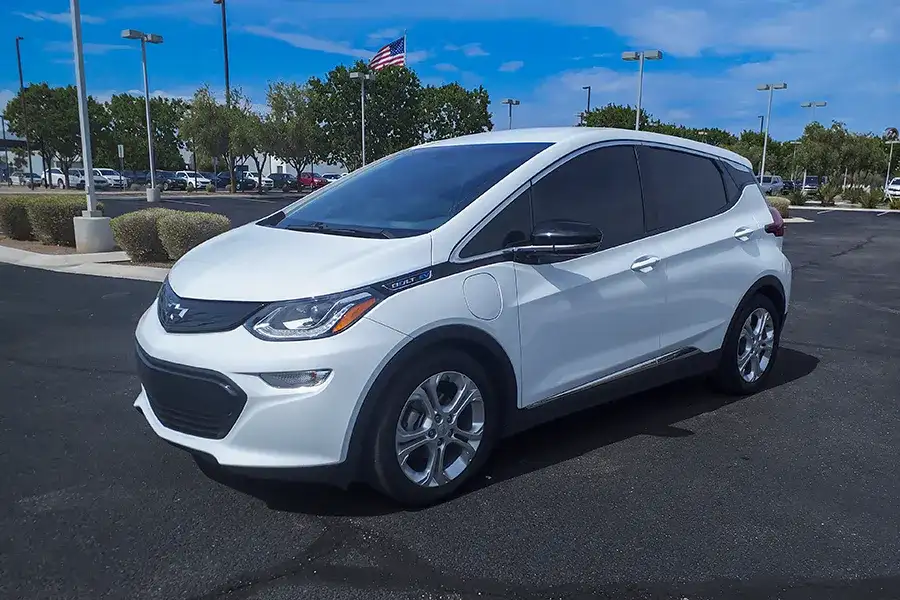
2021 Chevrolet Bolt EV
The most significant differences involve charging, battery technology, driving range, and cabin systems.
| Category | Previous Bolt EV and Bolt EUV | 2027 Chevrolet Bolt |
| Peak DC fast charging | Up to 55 kW | Up to 150 kW |
| Battery | Previous-generation lithium-ion battery | 65-kWh lithium-iron-phosphate battery |
| EPA-estimated range | Up to 259 miles for the 2023 Bolt EV and 247 miles for the 2023 Bolt EUV | 262 miles |
| Horsepower | 200 horsepower | 210 horsepower |
| Torque | 266 lb-ft | 169 lb-ft |
| Charging port | CCS | NACS |
| Cabin heating | Resistive heater | Heat pump |
| Regenerative braking | One-pedal driving and steering-wheel regen paddle | Three one-pedal-driving settings; no steering-wheel regen paddle |
| Smartphone projection | Apple CarPlay and Android Auto | Apple CarPlay and Android Auto are not included |
Specifications and estimates can vary by model, trim, equipment, conditions, and testing method.
How Much Faster Does the 2027 Chevrolet Bolt Charge?
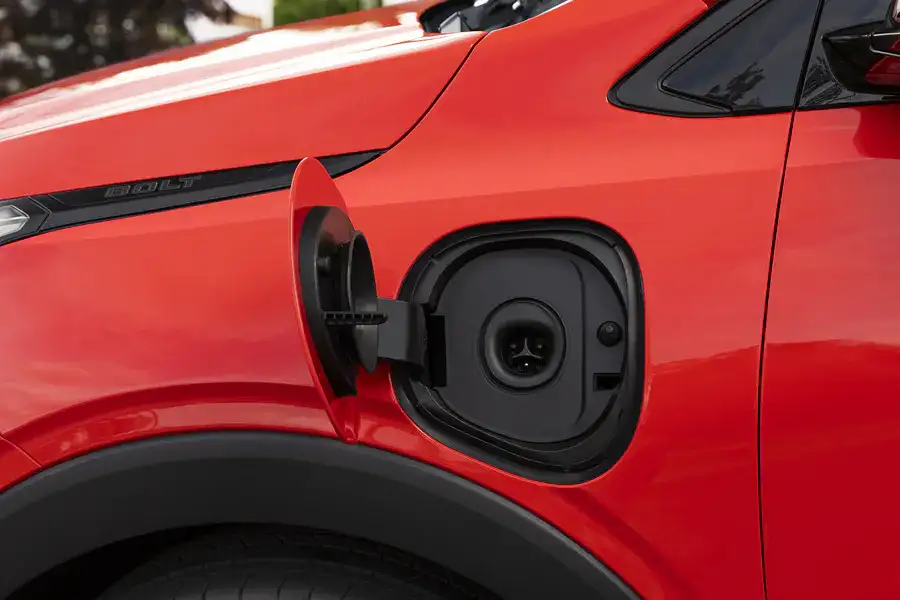
Faster DC charging is arguably the new Bolt’s most meaningful improvement.
The previous Bolt EV and Bolt EUV reached a peak DC fast-charging rate of 55 kW. That was sufficient for overnight home charging and local use, but it could result in lengthy stops during longer trips.
The 2027 Bolt raises the peak DC fast-charging rate to 150 kW, nearly three times the previous maximum. Car and Driver measured a 38-minute charge from 10% to 90% during its independent testing.¹
Charging time will vary based on battery temperature, battery condition, the starting charge level, charger capability, weather, and other factors. Even with those variables, the increased peak rate represents a substantial improvement for drivers who occasionally travel beyond their normal daily routine.
The Bolt also uses a standard NACS charging port, which can simplify access to compatible NACS fast chargers, including eligible Tesla Supercharger locations. Charging-network access, payment requirements, connector compatibility, and available charging speeds can vary.
For a driver who handles school pickup near William Penn High School during the week but wants the flexibility to travel farther on weekends, the faster charging system makes the Bolt easier to consider as more than a short-trip commuter.
Does the New Chevrolet Bolt Have More Range?
The 2027 Bolt has an EPA-estimated range of 262 miles on a full charge.¹ Actual range will vary with driving speed, weather, cabin-climate use, terrain, battery condition, vehicle load, and other factors.
Car and Driver also recorded 230 miles in its 75-mph highway range test. That result was 40 miles farther than the previous Bolt EUV achieved in the publication’s testing and 10 miles farther than the former Bolt EV.¹
The numerical range increase is relatively modest compared with the improvement in charging speed. Taken together, however, the two changes give the new Bolt a stronger mix of daily usability and longer-trip flexibility.
Most local routines will depend less on maximum range than on how easily the vehicle fits into daily life. Commuting, grocery trips, afternoon activities, and a weekend run with bikes or outdoor gear headed toward Lums Pond can all place different demands on an EV. The Bolt’s combination of usable range, compact dimensions, and cabin flexibility helps it address those varied needs.
What Did Chevrolet Keep from the Bolt EUV?
Chevrolet retained one of the previous Bolt EUV’s strongest qualities: efficient interior packaging.
The 105.3-inch wheelbase provides a generous rear passenger area relative to the Bolt’s compact exterior dimensions. Car and Driver found enough rear legroom to accommodate six-foot passengers even with the front seats moved far back.¹
That passenger space matters because the Bolt is not positioned solely as a one-person commuter. Its five-passenger cabin can support carpooling, family errands, or a night out without requiring the footprint of a large SUV.
The interior also includes open storage areas and useful cubbies. Physical controls remain for functions such as climate settings, wipers, and gear selection, helping the Bolt avoid the all-screen approach found in some newer EVs.
Does the 2027 Bolt Have More Power?
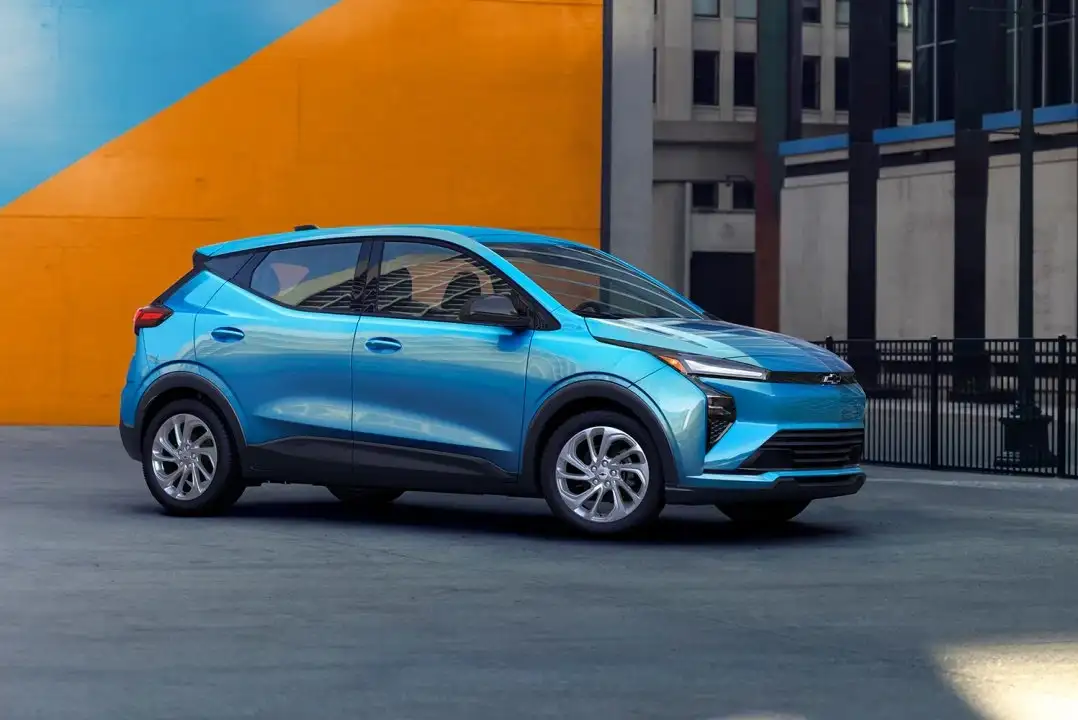
The 2027 Bolt’s front-mounted electric motor produces 210 horsepower, an increase of 10 horsepower over the previous generation. Torque decreases from 266 lb-ft to 169 lb-ft, so the powertrain is not an across-the-board increase on paper.¹
Chevrolet uses a shorter final-drive ratio to help compensate for the lower torque output. In Car and Driver testing, the 2027 Bolt accelerated from zero to 60 mph in 6.7 seconds and provided sufficient response for city driving, highway merging, and passing.¹
That balance fits the Bolt’s purpose. It is not attempting to be a high-performance EV. Its responsive steering, low center of gravity, manageable size, and readily available acceleration are intended to make normal driving comfortable and engaging.
How Have Regenerative Braking and Cabin Technology Changed?
The previous Bolt’s steering-wheel-mounted regenerative-braking paddle is no longer included. In its place, the 2027 Bolt offers three one-pedal-driving settings that let drivers choose how strongly the vehicle slows when they lift off the accelerator.
Drivers who prefer a more traditional coasting sensation can select the least aggressive setting. Stronger settings allow the motor to recover more energy while providing greater deceleration without immediately using the brake pedal.
The climate system now uses a heat pump instead of the resistive heater found in previous Bolt models. A heat pump can warm the cabin more efficiently, which is particularly useful when cold weather places additional demands on an EV battery.
The infotainment system uses Google built-in technology. Apple CarPlay and Android Auto compatibility are not offered, so shoppers who regularly use smartphone projection should spend time with the integrated system during a test drive.
What New Technology Is Available in the 2027 Bolt?
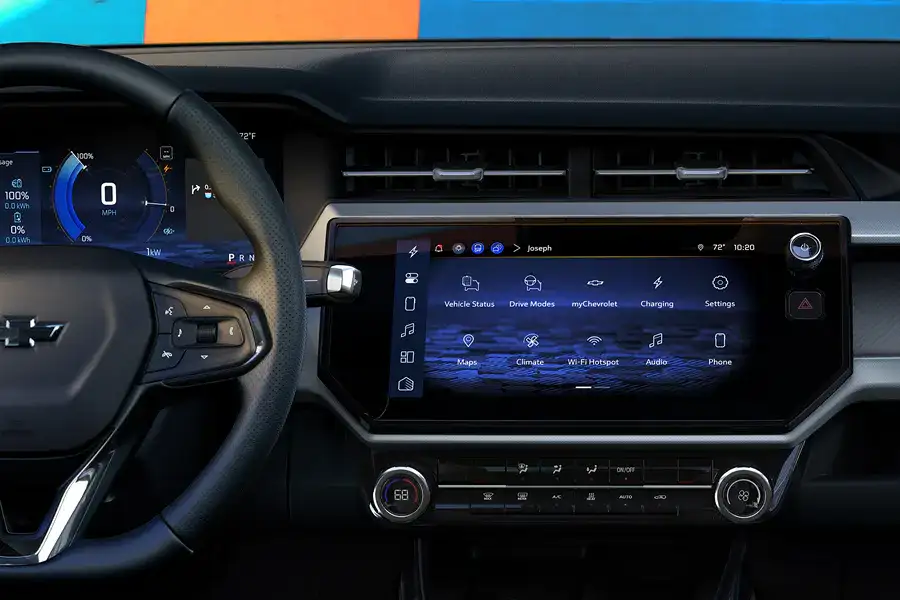
The updated electrical architecture supports technology that was not offered on the previous Bolt generation.
Available Super Cruise provides hands-free driver assistance on compatible roads. Super Cruise requires an attentive driver and does not make the vehicle autonomous.
The new architecture also supports software updates and available vehicle-to-home capability with the necessary compatible equipment. Vehicle-to-home technology can allow the Bolt’s battery to provide power to a properly equipped home under certain circumstances.
Feature availability may depend on the trim, package, subscription, supporting equipment, and other requirements. Shoppers should review the equipment included with a specific vehicle rather than assuming every Bolt has the same technology.
Why the Bolt’s EV of the Year Award Matters
The 2027 Chevrolet Bolt did not win Car and Driver’s EV of the Year award because Chevrolet completely abandoned the previous model. It won because Chevrolet preserved the Bolt EUV’s useful passenger space and approachable dimensions while improving the areas that most needed attention.
The new Bolt charges nearly three times faster at its peak rate. It travels farther in Car and Driver’s highway testing. It gains updated battery and electrical technology. It remains easy to operate, compact enough for everyday errands, and spacious enough to function as a practical household vehicle.
That is an evolution with a clear purpose—and it explains why the returning Bolt stood out among newer and more expensive electric vehicles.
Frequently Asked Questions
Why did the 2027 Chevrolet Bolt win Car and Driver’s EV of the Year?
Car and Driver selected the 2027 Bolt for its combination of accessible pricing, practical interior space, useful range, substantially faster charging, driving character, technology, and ease of operation.
How much faster does the 2027 Chevrolet Bolt charge than the previous Bolt?
The previous Bolt EV and Bolt EUV supported a peak DC charging rate of 55 kW. The 2027 Bolt supports a peak rate of 150 kW. Actual charging speeds and times vary with the charger, battery, weather, and other conditions.
Is the 2027 Chevrolet Bolt based on the old Bolt EV or Bolt EUV?
The 2027 Bolt uses the longer wheelbase, basic body structure, and proportions of the previous Bolt EUV. Chevrolet has substantially updated the battery, charging system, motor, electrical architecture, regenerative-braking controls, and other technology.
Does the 2027 Chevrolet Bolt have Apple CarPlay or Android Auto?
No. The 2027 Bolt uses a Google built-in infotainment system and does not include Apple CarPlay or Android Auto compatibility.
Shop the 2027 Chevrolet Bolt in New Castle, DE
The award-winning 2027 Chevrolet Bolt is available now at Nucar Chevrolet of New Castle. At the time of publication, two models are listed in our current inventory.
Browse our current Chevrolet Bolt inventory to compare the available vehicles, review equipment, and see current pricing. You can also apply for financing or value your trade before visiting.
Stop by Nucar Chevrolet of New Castle at 174 North Dupont Highway to see how the 2027 Bolt’s award-winning improvements fit your driving routine. Helping local drivers find a Chevrolet that makes sense for everyday life is one more reason Everyone Loves A Nucar!
0 comment(s) so far on 2027 Chevrolet Bolt Wins Car and Driver EV of the Year: What Changed from the Bolt EV and Bolt EUV?